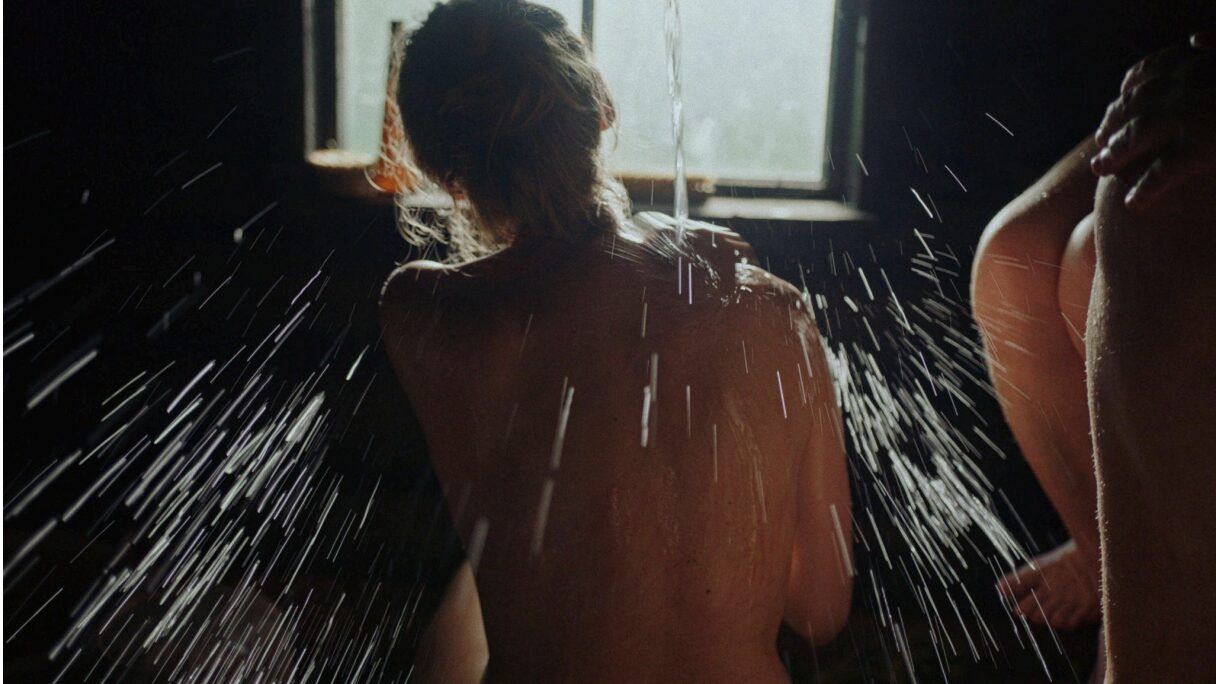
Filmed in a traditional sauna in the woods, where a group of women regularly gather, the documentary Smoke Sauna Sisterhood by Anna Hints serves as a feminist manifesto. Crowned as the European Documentary of 2023 at the European Film Awards and screened out of competition at the 35th Trieste Film Festival, it portrays the cathartic and healing power of Estonia’s centuries-old smoke saunas and cleansing rituals which not only facilitate physical purification but also provide an opportunity for expressing intimate and unspoken truths within the safe space of an all-female community.
The documentary begins with the image of the ample belly of a mother breastfeeding her chubby daughter, accompanied by a hopeful chant for the newborn. This note of hope starkly contrasts with the women’s traumatic experiences rooted in a patriarchal society based on control, humiliation, and denial of women’s bodies, their psychological and emotional lives, freedom of choice and self-determination, and traditions of shame and submissiveness passed down through generations that these modern women collectively shake off. Indeed, their stories span from gender-based violence to the shame of abortion, facing a cancer diagnosis, and even laughing off patronising and one-sided sexual advances from men – or much worse.
The scrubbing of the bodies goes hand in hand with the cleansing of the souls. The practice of long sweat, rubbing oneself with coarse salt, gently whipping one another with leafy birch branches, corresponds with delving into the depths of human intimacy to the point of pain. Uncomfortable feelings and confessions that can be released nowhere else find an expression in this space of catharsis and suspension, guided by the sauna’s silence—almost as if it was safeguarding what is shared in this sacred place or acknowledging the limitations of words to articulate it adequately. The sauna becomes not only a physical place of purification but also a symbolic place of regeneration, a shaded, humid and comfortable womb that offers its daughters protection, solace and the possibility of rebirth.
Flesh is the key visual image of the documentary: the gleaming, sweating skin of the women’s bodies represents a resolute antithesis of the traditional sexualised female image. Against the darkness of the enclosed space, cinematographer Ants Tammik’s close-ups of limbs, skins, hair, magnificent bellies and breasts – typical feminine traits which firmly place us in the intimate realm of women -form a continuum of natural bodies that intertwine and blend with the sauna itself, reminiscent of cubist paintings by Picasso and Braque.
The colour palette consists primarily of yellow and golden in contrast with the darkness of the sauna, enhancing the texture of the bodies, which, by reflecting the artificial lighting, feel like a unique source of illumination, and merge with the walls made of wooden panels. The sauna sisters’ faces are cropped out of the frame or obscured, with the exception of two — one bearing the impact of others’ stories and the other sharing a personal experience of coming out to her parents — contributing to the creation of a collective and universal narrative with which the audience relate
and identify.
With this documentary, Hints explores the trauma intrinsic to womanhood and the female condition as she captures the rawness and authenticity of women’s bodies, along with the harshness and brutality of unhealed trauma. Its destructive force and shame are accentuated through the juxtaposition with the triumphant celebration of the female body, which, in the sanctuary of the sauna, shielded from the world’s humiliations, regains its rightful centrality and creative potency bestowed upon it since the dawn of time.
The sauna emerges as a folkloric ritual reminiscent of a female Sabbath with its own culture and principles, including Estonian traditional songs and chants which, whether heard in the background or performed by the women on-screen, emphasise the primordial and mystical aspect of the rite, open to new forms of life and awareness. Indeed, the film becomes a choral song of extreme vulnerability and courage, portraying an ancient ritual that reverberates with notes of exorcism and transformation, both personal and communal, until the final rebirth, symbolised by spring and its
colours and sounds.