The London Underground as a Place of Art
Logline: “Where there is life, there is art,” said Frank Pick in 1917. For the past 20 years, the Art on the Underground project has turned the London Underground into a kind of contemporary art scene that invites travellers to stop, to reflect on space, and to look at new perspectives of the urban environment during their journey. The project has transformed the way people perceive and interact with the metropolis.
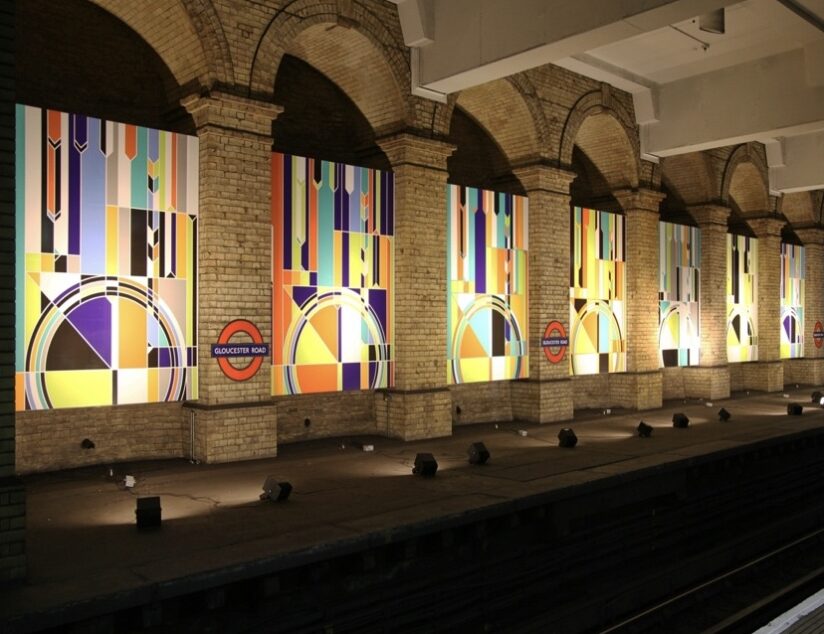
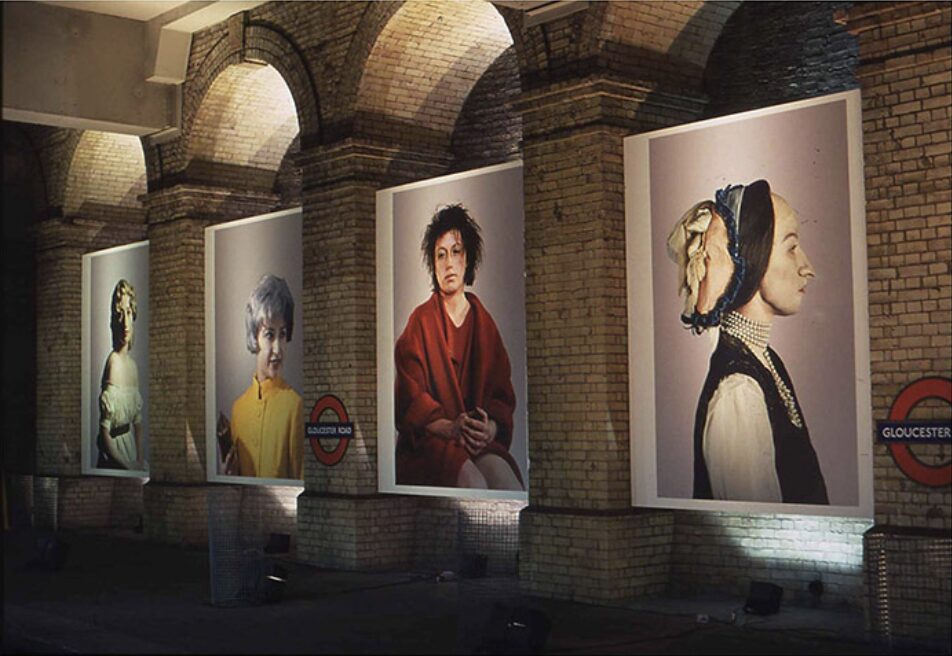
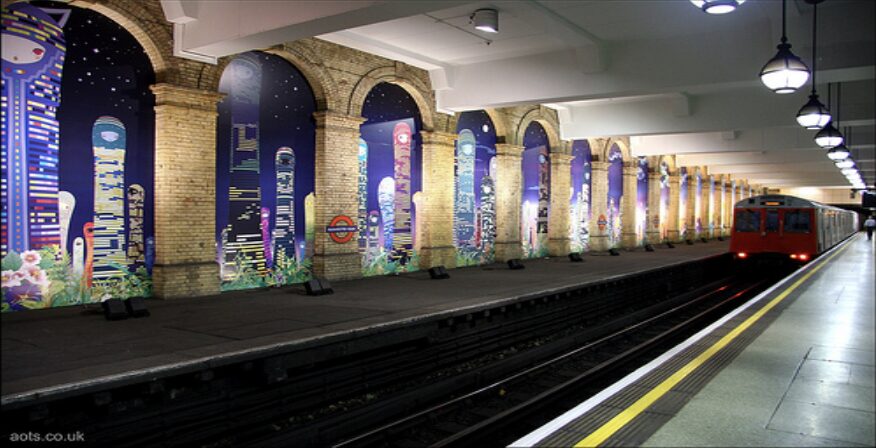
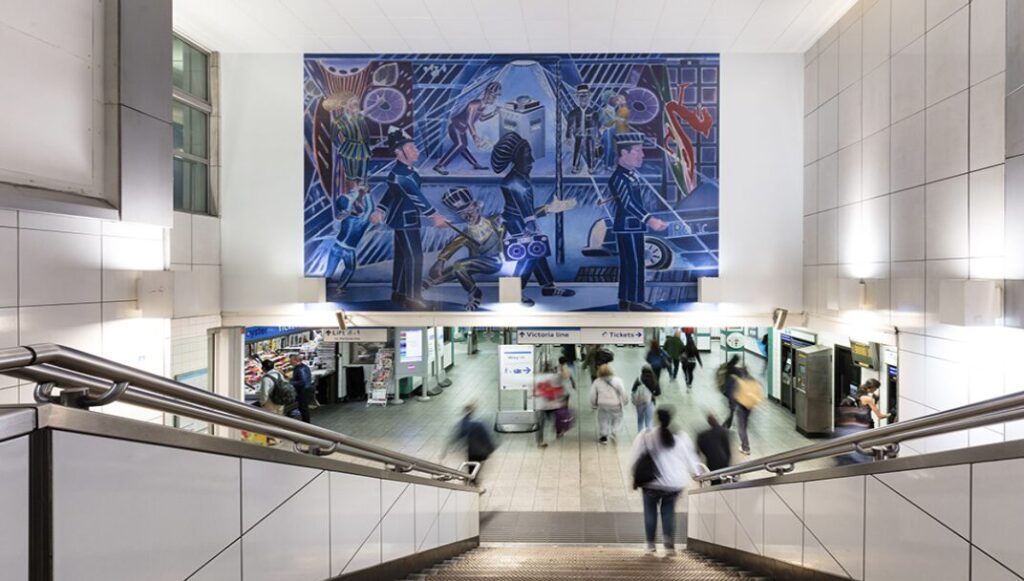
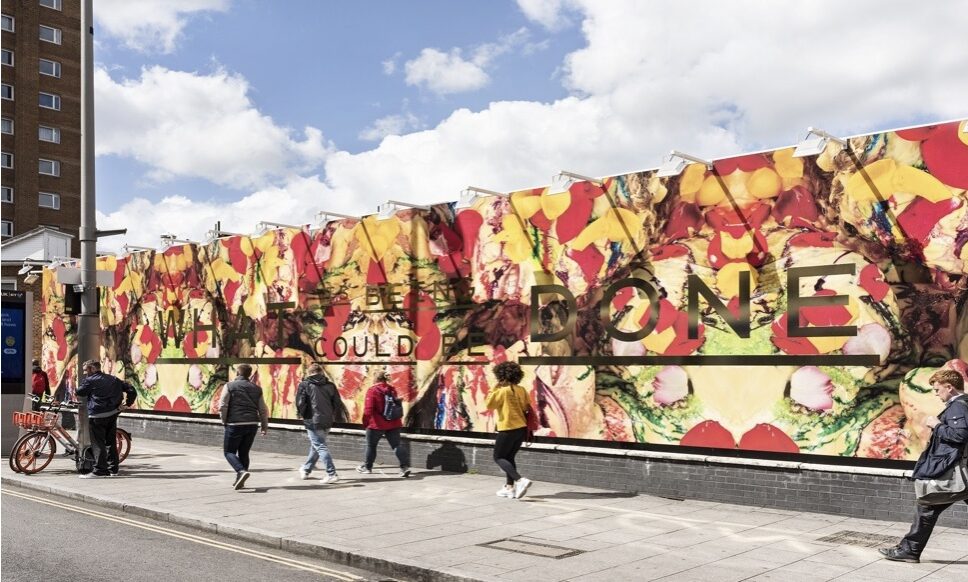
Abstract: Frank Pick said in 1917: “Where there is life, there is art.” Pick was not an artist, but the Managing Director of the London Underground and his visionary and still relevant approach turned the London tube into one of the most significant ‘patrons’ of the metropolis. Since 2000, important contemporary artworks, both permanent and temporary, have been scattered throughout London thanks to collaborations with artists such as Jacqueline Poncelet, Knut Henrik Henriksen, John Maine, and Daniel Buren. All of these renowned artists have transformed the Underground network into a setting, an underground installation for visual art. The project, called Art on the Underground, opened up a new perception of the London tube in its cultural and social dimensions, re-imagining spaces and transforming the way people experience the metropolis, thus enriching Londoners’ travel experience. The project was born from the idea of making art inside a disused platform in Gloucester Road station. Since then, 350 artists have been commissioned to create works of all kinds, from large-scale installations in Gloucester Road station to huge photomontages and murals in Brixton and Southwark. Artists were also called upon to create images for the cover page of the underground pocket map available on all underground lines. The initiative is mainly concerned with temporary projects and in recent years has resulted in ambitious works such as those on female identity and the refugee crisis. By collaborating with established and emerging artists worldwide, the project provides a reflection on the ‘global city’, while at the same time the works open up new visions and perspectives of the London Tube.
Presentation of the character(s) and locations:
The documentary takes place entirely in underground London, actually more alive and animated than the open-air metropolis of cold glass buildings and skyscrapers and blazing red buses. The project focuses on the underground seen not simply as a transit area and means of transport for the millions of citizens every day, but as a place in its own right, with its own identity and raison d’être. Indeed, underground London, with its ravines, tunnels, cul-de-sacs and caliginous rivers, has fascinated and inspired generations of artists and writers since the time of Charles Dickens, but nowadays it takes on a new life in the dense network of colourful lines and worn carriages of its underground railway with some three million passengers a day. The documentary therefore aims to explore the exchange between art and the metropolis in the context of the London tube and the resulting interaction between citizens and the urban environment. It aims to highlight the fundamental role that the tube plays in the daily lives of Londoners, which is further enhanced by the project to transform it into a cultural centre to enrich and alleviate the journey of millions of commuters. The documentary therefore collects interviews with the creators of the project and some of the most significant artists, with reference to both permanent works and temporary works to be set up for the 2021 edition. In addition, the project intends to collect the voices of Londoners themselves in front of the works, in order to verify the success of the project and its appreciation “in toto”. In fact, despite the large catchment area and the interaction of some of the most famous artists, the project still remains largely unknown outside the art world. Finally, the documentary aims to show the preparation of some works for the new edition in 2021, to show the artists at work and to bear witness to the current integration of art in the urban and underground context of the metro.
Main characters:
Eleanor Pinfield: she has been head of Art on the Underground since 2014, when, after leaving the Tate, she replaced the then director, Tamsin Dillon. She affirms her enthusiasm for the opportunity to deal with the kind of audience that normal art galleries can only dream of: instead of affluent older white people, working-class civilians of all ages and ethnicities.
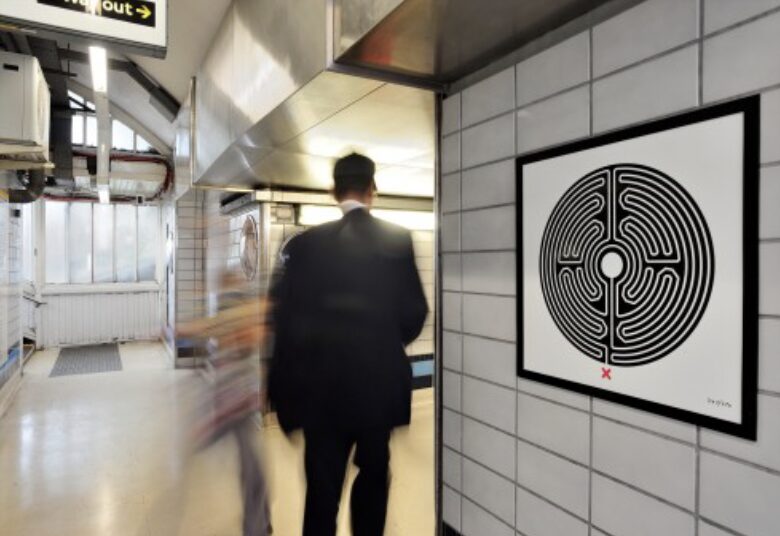
Mark Wallinger: one of Britain’s most celebrated contemporary artists, he is the author of one of the most important works for the London Underground (The Labyrinth), created in 2013 on the occasion of the tube’s 150th anniversary. The work, composed of several parts scattered throughout the tube’s 270 stations, is a poetic reference to the tube’s rich history of graphic language and stands as a new symbol of the tube.
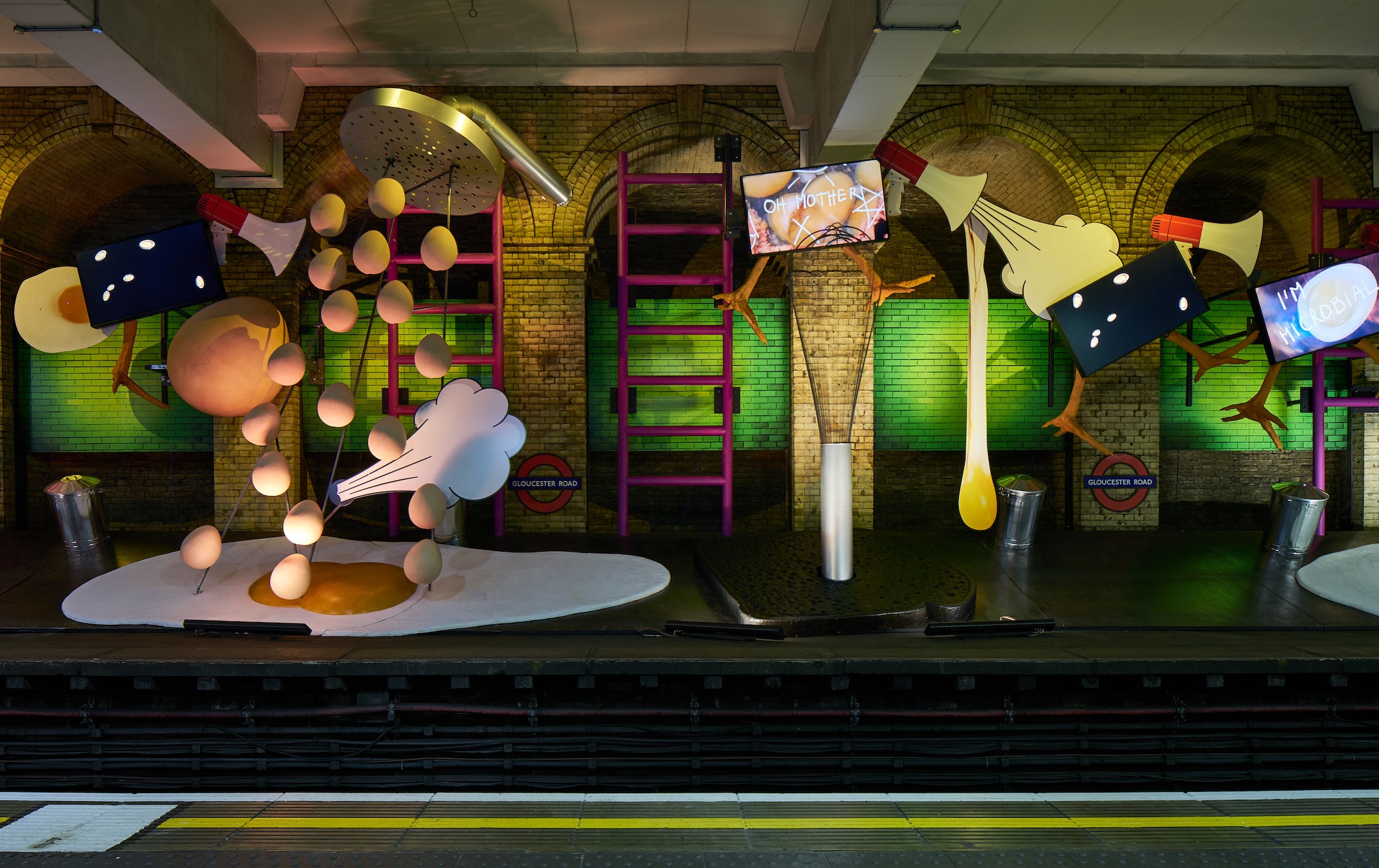
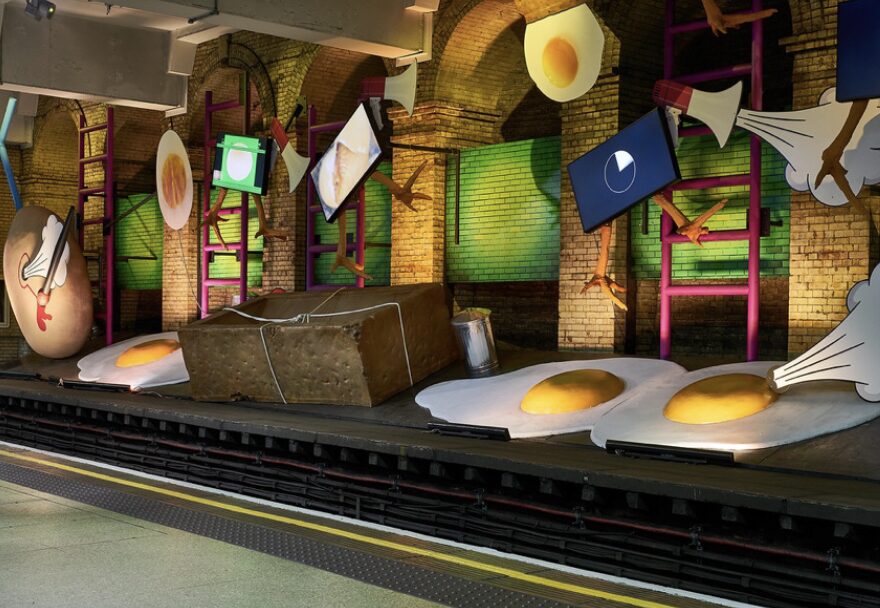
Heather Phillipson: British artist and poet living in London. She works in a variety of media including video, sculpture, music, graphic design and drawing. A renowned poet, she has also worked abroad and her work has won several awards. At the centre of her art is the relationship between human and non-human, which inspired her invasive installation on the disused track at Gloucester Road Station in 2018, in which eggs and bird limbs, distorted to monstrous proportions, bear witness to human interference with nature.
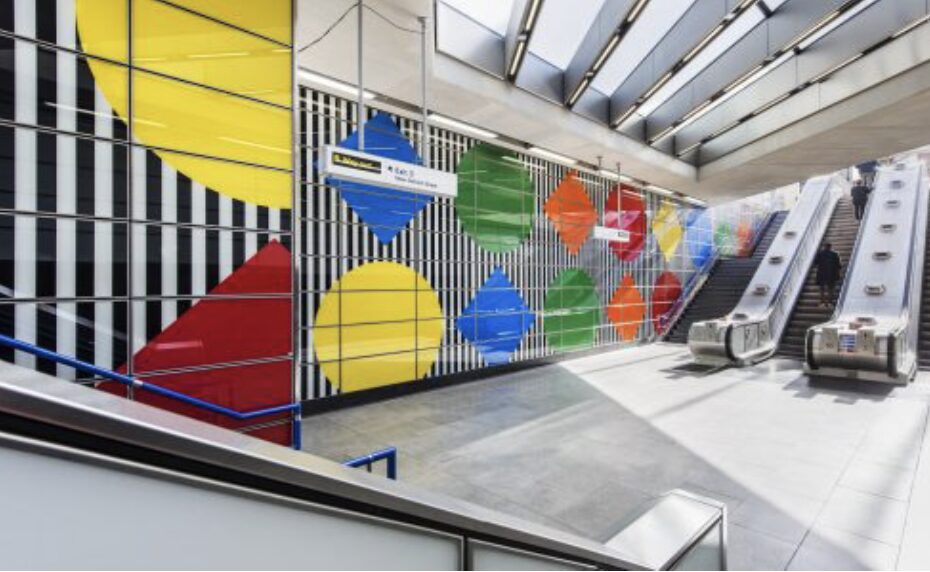
Daniel Buren: considered the greatest living French artist and one of the most significant exponents of so-called conceptual art. His works can be admired all over the world, at the Palais-Royal in Paris, at Odaïba Bay in Tokyo and at the Ministry of Labour in Berlin. His work ‘Diamonds and Circles’ consists of colourful geometric patterns that chase each other inside the ticket office and at the different entrances of Tottenham Court Road station. Giant, colourful diamonds and spheres are repeated in the spaces on the station’s glass walls. A central display case contains 3D ‘ancestors’ of the coloured shapes. The work measures physical space through lines and shapes and asks us to reconsider our progress through the station space.
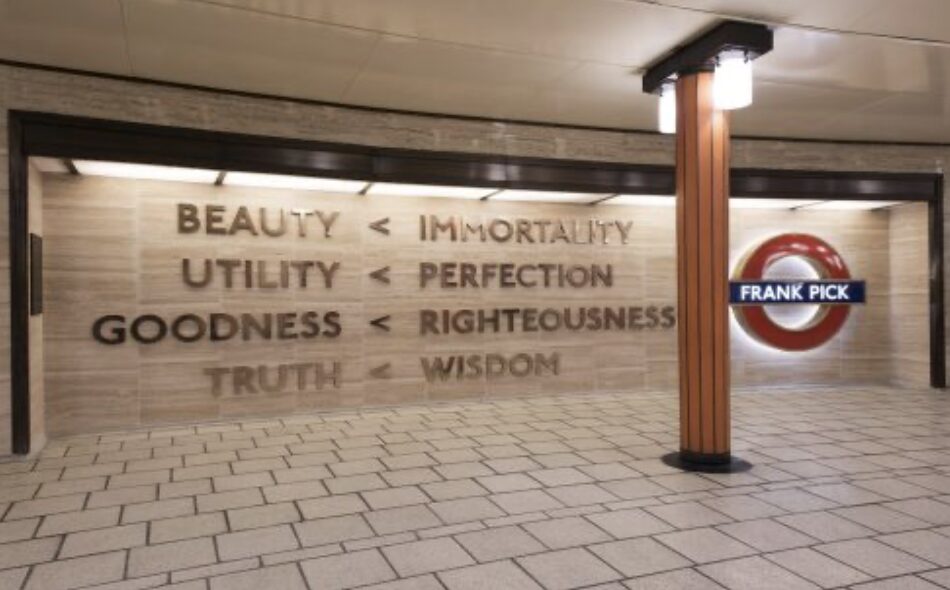
Ben Langlands and Nikki Bell: authors of Beauty < Immortality, a work in memory of Frank Pick located in Piccadilly Circus since 2016. The work represents the typical London Underground logo, the medallion, accompanied by solid letters in Johnston font, commissioned by Pick himself in 1915 and still in use throughout the London transport network. The words refer to Pick’s philosophy of beauty, usefulness, goodness and truth and were found by artists in Pick’s own private papers preserved in the London Transport Archive. The monument is therefore intended to emphasise Pick’s belief that the quality of an environment should contribute decisively to our quality of life.
Director’s notes:
Filming will be alternated with video interviews with the managers and artists involved in the project. The interviews will mostly take place in their private studios. There will also be impromptu, unplanned interviews with Londoners in the same location as the works, e.g. the Tottenham Court Road or Gloucester Road stop. The rhythm of the narrative will be achieved by the alternation of the people in front of the camera, as well as by the pace of a London worker’s day, on and off the tube. The rhythm is thus intended to be chaotic and fast-paced, to convey to the viewer the proper frenzy of the place. The digressions on the works of art, as well as the interviews, will, on the other hand, be moments of pause, of stillness, to indicate the possible reflections and introspections that the work of art offers in the context of the daily ‘commute’. Particular attention will be given to the filming of the artists at work, which will be accompanied by the voice over of the artists themselves as they illustrate their project. In fact, the work aims to closely follow the realisation of at least one of the works for the 2021 edition. The photography will have a strong narrative value. There will be images of the tube, photographs and archive footage, also in black and white, that well represent the development of the tube over time, with particular attention to photos of works from previous editions and preparatory work. A great deal of attention will also be devoted to live sounds. The sounds will, in fact, mostly be the sounds of the tube, the buzz of the crowd, the announcements from the loudspeaker, to give an impression of reality and everyday life. The filming will take place over a period of five or six weeks. It will not be consecutive, but will take place over a period of about three months. The collection of material and interviews should cover the duration of eight weeks, while the internal narrative arc should be 24 hours, as it intends to represent the typical 24 hours of a Londoner on the tube.
Visual documentation:
Sitography:
• https://en.wikipedia.org/wiki/Art_on_the_Underground
• https://theculturetrip.com/europe/united-kingdom/england/london/articles/bringing-art-to-the-masses-with-art-on-the-underground/
• https://www.theguardian.com/uk-news/2015/jun/29/art-underground-new-project-electrify-victoria-line
• https://www.culture24.org.uk/am54819
• https://www.creativereview.co.uk/how-i-work-eleanor-pinfield-art-on-the-underground/
• https://www.youtube.com/watch?v=maUCcKOTxhE
• https://www.studiointernational.com/index.php/eleanor-pinfield-interview-london-underground-deserves-best-artists-in-world